Sourdough Focaccia Bread Recipe
This sourdough focaccia bread recipe delivers a pillowy, golden crust with a tangy depth of flavor that store-bought bread simply cannot match. It is surprisingly easy to make and endlessly customizable with your favorite toppings.

The Only Sourdough Focaccia Recipe You Will Ever Need
If you have been searching for an easy focaccia bread recipe that actually delivers on flavor, you have landed in exactly the right place. This sourdough focaccia is everything a great loaf should be: pillowy and open-crumbed in the center, impossibly crispy and golden on the bottom, and deeply savory with just enough tang to make it completely irresistible. The best part? Most of the work is completely hands-off.
This is not your average quick focaccia bread recipe that cuts corners on flavor. Instead, it leans into the magic of sourdough fermentation to build complexity that a packet of commercial yeast simply cannot replicate. And while the timeline does span overnight, the actual hands-on time is minimal. Think of it as the easiest impressive thing you will ever bake.
Why Sourdough Makes All the Difference
Traditional baked bread recipes using instant yeast are perfectly good, but sourdough fermentation does something remarkable to focaccia specifically. The long, slow rise breaks down the starches in the flour, creating a lighter, more digestible crumb with a subtle tangy backbone that pairs beautifully with olive oil, salt, and fresh herbs.
Focaccia is also one of the most forgiving breads to make with sourdough. Because the dough is so high in hydration and the final shape is a simple rectangle, you do not need the precise shaping skills that sourdough boule baking demands. If you have been intimidated by sourdough, this is the perfect place to start.
Baker's Note: Your starter needs to be bubbly and at peak activity when you mix the dough. Feed it 4 to 8 hours before you plan to bake for the best rise and flavor development.
The Ingredients That Actually Matter
This recipe has a short ingredient list, which means every single item carries real weight. Bread flour gives the crumb its signature chew. A generous pour of extra virgin olive oil is non-negotiable, both inside the pan and drizzled on top. And please, use flaky sea salt for finishing. It is a small detail that makes an enormous difference on the first bite.
For toppings, rosemary and sliced garlic are the classics for a reason. But this dough is also a brilliant canvas for cherry tomatoes, kalamata olives, caramelized onions, or even thin slices of lemon.
Using quality ingredients and the right baking pan genuinely changes the outcome of this recipe. A light-colored metal pan distributes heat evenly and produces that coveted crispy underside that makes focaccia so craveable.
How to Get Those Perfect Dimples
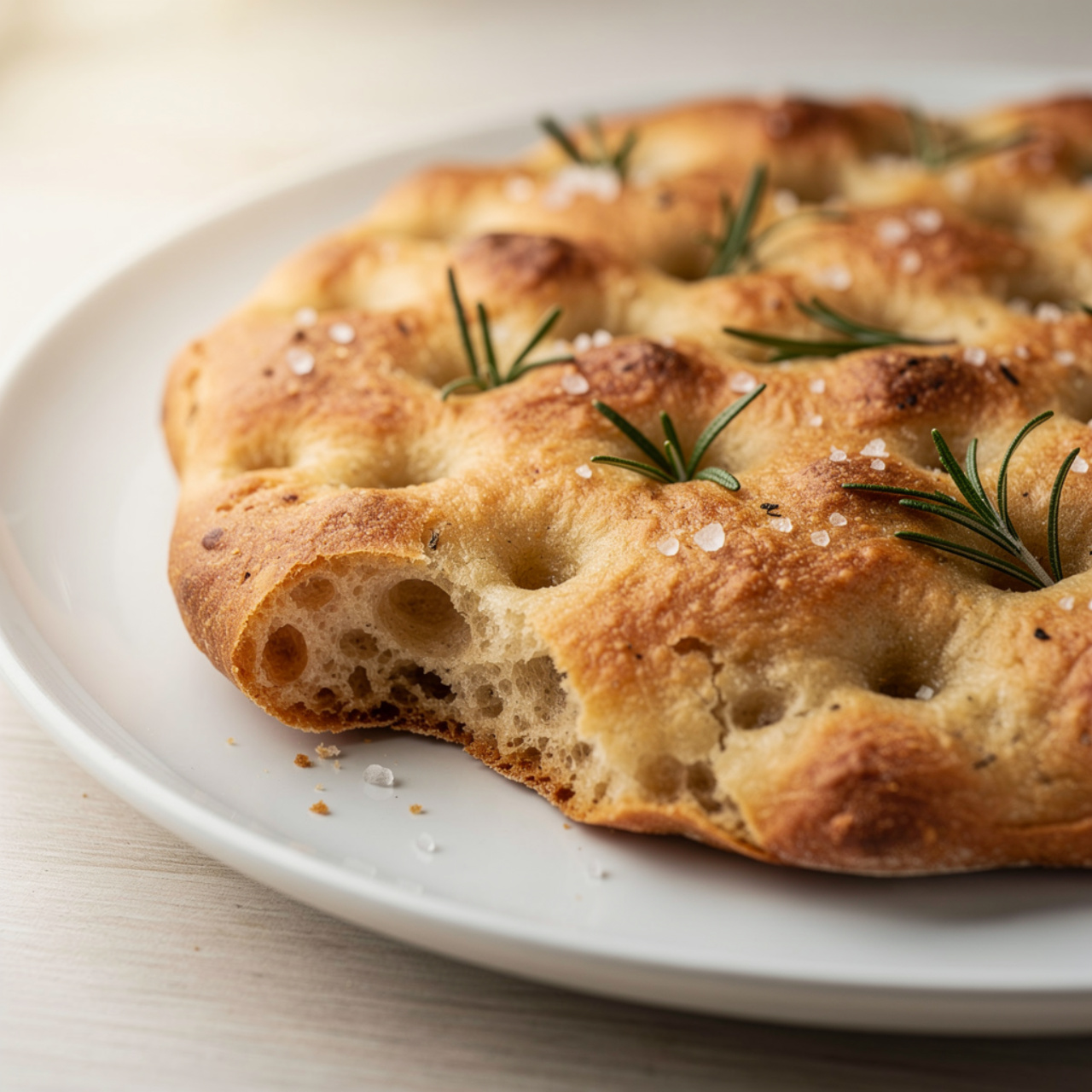
The dimples are not just aesthetic. They serve two important purposes: they anchor the olive oil and toppings so they do not slide off during baking, and they help the surface bake evenly rather than puffing up in uneven bubbles.
The secret is confidence. Press your fingers straight down into the dough, all the way to the bottom of the pan. Do not be shy. If the dough is cold from the refrigerator and resists your fingers, let it rest at room temperature for an extra 15 to 20 minutes and try again.
Pro Tip: Right before the dough goes into the oven, give it one more generous drizzle of olive oil directly into each dimple. That pooled oil is what creates the crackling, golden crust.
The Stretch-and-Fold Technique
This easy focaccia bread recipe uses stretch-and-folds instead of traditional kneading. It sounds fancy, but it is genuinely simple. Every 30 minutes during the first 2 hours of fermentation, you grab one side of the dough, stretch it up as far as it will go without tearing, and fold it over the center. Rotate the bowl a quarter turn and repeat on all four sides.
Four sets of this is all it takes to develop strong, elastic gluten that will hold all those beautiful bubbles during the final bake. After that, you walk away and let time do the rest of the work.
Topping Ideas Beyond the Classic
Once you have mastered the base sourdough focaccia bread recipe, the variations are endless. Here are a few combinations worth trying:
- Caramelized onion and thyme for a deeply savory, sweet loaf
- Cherry tomato and basil pressed into the dimples before baking
- Lemon zest, fennel frond, and black olive for a bright, Mediterranean take
- Everything bagel seasoning scattered generously on top for a crowd-pleasing brunch version
- Gruyere and black pepper melted directly into the surface for something indulgent
These focaccia bread quick variations all follow the same base recipe. The dough is endlessly forgiving and adapts beautifully to whatever you have on hand.
Ready to bake the most satisfying loaf of your life? Here is the full step-by-step recipe:
Sourdough Focaccia Bread Recipe
This sourdough focaccia bread recipe delivers a pillowy, golden crust with a tangy depth of flavor that store-bought bread simply cannot match. It is surprisingly easy to make and endlessly customizable with your favorite toppings.
Ingredients
- 1/2 cup active sourdough starter, fed and bubbly, at peak activity
- 1 1/4 cups warm water, around 90 degrees F
- 2 1/2 cups bread flour, plus more for dusting
- 1 1/2 tsp fine sea salt
- 5 tbsp extra virgin olive oil, divided, use a good quality oil for best flavor
- 1 tsp flaky sea salt, for topping, such as Maldon
- 3 fresh rosemary sprigs, leaves picked, optional but highly recommended
- 3 garlic cloves, thinly sliced, optional
Instruction
In a large mixing bowl, whisk together the active sourdough starter and warm water until combined and the starter is fully dissolved into the water.
Add the bread flour and fine sea salt. Mix with a sturdy spatula or your hands until a shaggy, sticky dough forms and no dry flour remains. The dough will look rough and that is perfectly fine.
Drizzle 2 tablespoons of olive oil into the bowl and use your hands to coat the dough, then cover the bowl tightly with plastic wrap or a damp kitchen towel.
Perform 4 sets of stretch-and-folds over the first 2 hours: every 30 minutes, grab one side of the dough, stretch it upward, and fold it over itself. Rotate the bowl 90 degrees and repeat all four sides. This builds gluten strength without kneading.
After the final stretch-and-fold, cover the bowl and let the dough bulk ferment at room temperature for 6 to 10 hours (or until roughly doubled in size). Timing depends on how warm your kitchen is and how active your starter is.
Generously coat a 9x13 inch baking pan with 2 tablespoons of olive oil, making sure the bottom and sides are well covered. This is the key to the crispy, golden underside.
Gently transfer the dough into the prepared pan. Use your fingers to coax it toward the edges. If it springs back and resists, let it rest uncovered for 15 minutes, then try again.
Cover the pan loosely with plastic wrap and refrigerate overnight (8 to 16 hours) for a slow cold proof. This develops the sourdough tang and makes the bread easier to work with.
When ready to bake, remove the pan from the refrigerator and let it come to room temperature for 1 hour. Preheat your oven to 450 degrees F (230 degrees C).
Drizzle the remaining 1 tablespoon of olive oil over the top of the dough. Using all ten fingers, press firmly and confidently straight down into the dough to create the signature deep dimples across the entire surface.
Scatter the fresh rosemary leaves, sliced garlic, and flaky sea salt evenly over the top.
Bake on the center rack for 22 to 26 minutes, until the top is deep golden brown and the edges are visibly crisp and pulling away from the sides of the pan.
Remove from the oven and immediately use a spatula to lift one corner and peek underneath. The bottom should be golden and crisp. Transfer to a wire rack to cool for at least 15 minutes before slicing and serving.
Equipment
- Large mixing bowl
- 9x13 inch metal baking pan
- Plastic wrap or damp kitchen towel
- Sturdy spatula or bench scraper
- Wire cooling rack
- Kitchen scale (recommended)
Notes
Serving and Storing Your Focaccia
Focaccia is best served warm, ideally within a few hours of baking when the crust is still at its crispiest. Tear it into generous pieces rather than slicing it cleanly. That is part of the charm.
It makes a stunning appetizer alongside a bowl of good olive oil for dipping, and it is equally at home as a side for soups, stews, and pasta. Leftovers make phenomenal sandwiches the next day: slice horizontally, pile on your favorite fillings, and press gently.
For storage, wrap cooled focaccia in a clean kitchen towel and keep it at room temperature for up to 2 days. To freeze, slice into portions, wrap individually in plastic wrap, and freeze for up to one month. Reheat directly from frozen in a 375 degree F oven for about 8 minutes and it will come back to life beautifully.
Whether this is your first attempt at fast focaccia bread recipes or you are a seasoned sourdough baker looking to branch out, this recipe will earn a permanent spot in your rotation. Once you taste that golden, tangy, herb-flecked crust, there is simply no going back.