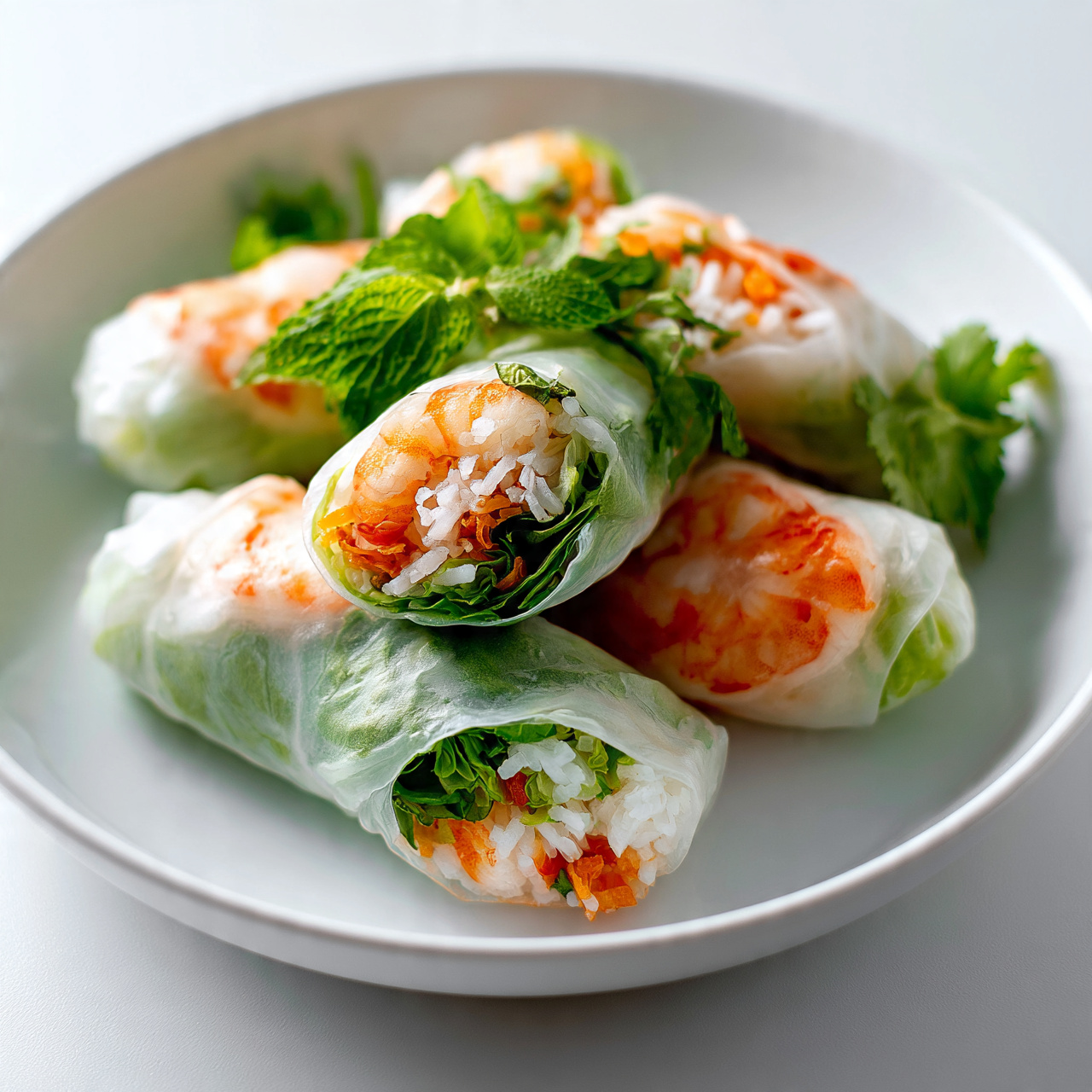
Vietnamese Summer Rolls (Fresh, Light, and Incredibly Easy)
These fresh Vietnamese summer rolls are packed with crisp vegetables, plump shrimp, and silky rice noodles, all wrapped in delicate rice paper and served with a rich peanut dipping sauce. A healthy, no-cook appetizer that looks impressive and tastes even better.

The Freshest Thing You Will Make All Summer
If you have never made Vietnamese summer rolls at home, you are in for a treat. These are not the deep-fried kind you might find at a Chinese-American restaurant. These are goi cuon, the cool, luminous, fresh rolls that are practically a Vietnamese institution. Translucent rice paper wrapped around plump shrimp, slippery rice vermicelli, crisp vegetables, and a cloud of fresh herbs. They are light, they are stunning on a plate, and they require absolutely zero cooking beyond boiling a little water.
This is the kind of recipe that feels more like assembling than cooking, which is honestly part of the joy. Everything gets prepped, laid out, and rolled at the table. It is a wonderful thing to make with friends or family, where everyone can customize their own rolls and nobody has to hover over a hot stove.
Why This Recipe Works So Well
Getting Vietnamese summer rolls right comes down to a few key things. The balance of textures matters enormously: you want the cool snap of cucumber against the creamy richness of avocado, the chew of noodles against the tender shrimp. Fresh herbs are non-negotiable. Mint and cilantro are what make these taste alive rather than just fresh.
But the real secret? The dipping sauce. A well-made peanut hoisin sauce with a squeeze of lime and a hint of garlic is what ties the whole dish together. Do not skip it and do not rush it.
These rice paper roll recipes are also endlessly adaptable. Swap the shrimp for tofu. Add mango for sweetness. Throw in some shredded purple cabbage for color. Once you master the basic roll, the variations are wide open.
Getting Your Tools and Ingredients Right
For the best results with rice paper wraps recipes, the quality of your rice paper matters more than you might expect. Thinner wrappers are more delicate and elegant, while thicker ones are more forgiving for beginners. A wide, shallow dish for soaking the wrappers is essential since you need room to lay the full round sheet flat.
Having the right setup makes rolling so much easier and more enjoyable.
How To Make Shrimp Rice Paper Rolls: The Rolling Technique
The rolling part is what intimidates most people, but it genuinely gets easier after your first two or three. Here is how to think about it:
- Do not over-soak the wrapper. Ten to fifteen seconds in warm water is all it takes. The paper will feel slightly stiff when you lift it out. That is correct. It continues softening as you work.
- Less filling than you think. This is the number one mistake. A small, tight bundle rolls far more cleanly than an overstuffed one.
- Shrimp goes down first, cut-side up. This is the face of the roll, the part that shows through the wrapper. Arranging the shrimp neatly in a line at the bottom gives you that beautiful restaurant-style presentation.
- Roll snugly but not aggressively. Think of it like swaddling, firm enough to hold everything together, gentle enough not to tear.
Chef's Tip: Keep a slightly damp kitchen towel on your work surface. The rice paper grips better on a damp surface than on a dry cutting board, and it prevents sticking.
The Peanut Dipping Sauce
This sauce is rich, nutty, tangy, and just a little spicy. It is made entirely from pantry staples and comes together in about two minutes. Whisk together peanut butter, hoisin, lime juice, soy sauce, garlic, and a splash of warm water until smooth. Taste it. Adjust the lime for brightness, the hoisin for sweetness, or the sriracha for heat.
This sauce keeps beautifully in the refrigerator for up to five days and honestly works on everything. Drizzle it over noodle bowls, use it as a veggie dip, or thin it out further to dress a salad.
Note: If you are serving guests with nut allergies, a simple nuoc cham made with fish sauce, lime, sugar, garlic, and chili is the traditional Vietnamese alternative and equally delicious.
What To Make With Rice Paper Rolls Beyond This Recipe
Once you have a stack of rice paper wrappers in your pantry, a whole world of rice paper roll recipes opens up. Try a mango and avocado version for a fully vegan option. Make a Korean-inspired roll with bulgogi beef and kimchi. Use leftover rotisserie chicken with hoisin and shredded cabbage for a quick weeknight version. Asian rolls like these are one of the most flexible formats in any kitchen.
You can also pan-fry these rolls in a little oil after assembling for a lightly crispy exterior, which bridges the gap between fresh summer rolls and the fried spring rolls you might know from takeout menus.
Ready to roll? Here is everything you need laid out step by step:
Vietnamese Summer Rolls (Fresh, Light, and Incredibly Easy)
These fresh Vietnamese summer rolls are packed with crisp vegetables, plump shrimp, and silky rice noodles, all wrapped in delicate rice paper and served with a rich peanut dipping sauce. A healthy, no-cook appetizer that looks impressive and tastes even better.
Ingredients
- 12 rice paper wrappers, 22cm round, banh trang brand preferred
- 3/4 lb large shrimp, peeled, deveined, cooked and halved lengthwise
- 3 oz rice vermicelli noodles, cooked according to package directions, cooled
- 12 butter lettuce leaves, torn to fit
- 1 English cucumber, cut into thin matchsticks
- 1 large carrot, peeled and cut into thin matchsticks
- 1 ripe avocado, thinly sliced
- 1/2 cup fresh mint leaves, loosely packed
- 1/2 cup fresh cilantro, loosely packed
- 4 green onions, thinly sliced on the diagonal
- 3 tbsp creamy peanut butter, natural, no added sugar
- 2 tbsp hoisin sauce
- 1 tbsp fresh lime juice, from about half a lime
- 1 tsp soy sauce, low sodium preferred
- 2 tbsp warm water, to thin the dipping sauce
- 1 garlic clove, finely minced
- 1 tsp sriracha, optional, for heat
Instruction
Cook the shrimp: Bring a small pot of salted water to a boil. Add the shrimp and cook for 2 to 3 minutes until pink and just opaque. Drain, then rinse under cold water. Peel, devein, and slice each shrimp in half lengthwise. Set aside.
Cook the noodles: Prepare the rice vermicelli according to the package directions. Drain and rinse well under cold water to stop cooking. Toss lightly with a few drops of sesame oil to prevent sticking, then set aside.
Make the peanut dipping sauce: In a small bowl, whisk together the peanut butter, hoisin sauce, lime juice, soy sauce, minced garlic, and sriracha if using. Add warm water one tablespoon at a time until the sauce is smooth and pourable. Taste and adjust seasoning as needed. Set aside.
Prep all fillings: Arrange the shrimp, noodles, lettuce, cucumber, carrot, avocado, mint, cilantro, and green onions in separate piles on a large cutting board or tray so everything is within easy reach.
Set up your rolling station: Fill a large shallow dish or pie pan with warm water (not boiling). Have a clean damp kitchen towel or a large plate lightly dampened with water ready to place finished rolls on.
Soften the rice paper: Working one sheet at a time, submerge a rice paper wrapper in the warm water for 10 to 15 seconds until it is just pliable but not fully soft. It will continue to soften as you fill it. Lay it flat on your damp surface.
Layer the fillings: Place 3 shrimp halves cut-side up in the lower third of the wrapper. On top of the shrimp, layer a small handful of noodles, a piece of lettuce, a few sticks of cucumber and carrot, a slice or two of avocado, a few mint leaves, cilantro, and a pinch of green onion.
Roll it up: Fold the bottom edge of the wrapper up and over the filling, pulling it snugly toward you. Fold in both sides like a burrito, then continue rolling forward firmly until sealed. The wrapper is self-sealing. Place seam-side down on your tray.
Repeat with the remaining wrappers and fillings. Keep finished rolls covered loosely with a slightly damp paper towel to prevent drying out.
Serve immediately with the peanut dipping sauce on the side.
Equipment
- Large shallow dish or pie pan (for soaking rice paper)
- Small saucepan
- Large cutting board
- Sharp chef's knife
- Small mixing bowl and whisk
- Large serving platter
Notes
Serving and Storing Your Summer Rolls
Summer rolls are at their absolute best the moment they are made. The wrappers are soft and glossy, the herbs are bright, and everything is at its freshest. Serve them on a large platter with the peanut sauce in a bowl alongside.
For a full spread, pair them with a light miso soup, a simple cucumber salad with rice vinegar, or steamed jasmine rice.
If you are prepping for a party, mise en place is your best friend here. Prep all the fillings the day before, store them in separate containers in the fridge, and roll fresh just before guests arrive. The sauce can be made days ahead. That way you get all the impressiveness with almost none of the last-minute stress.
This summer roll recipe is proof that healthy and satisfying are not opposites. Fresh, colorful, packed with protein and crunch, and genuinely fun to eat. Once you make them, they have a way of becoming a regular in the rotation.