Sourdough Bread Flavors: 5 Irresistible Variations to Bake at Home
Discover the most delicious sourdough bread flavors you can bake at home, from rich chocolate chip sourdough to savory specialty loaves that rival any Southern sourdough co bread recipe.

The World of Flavored Sourdough Bread (And Why You Need to Explore It)
If you have ever pulled a plain sourdough loaf from the oven and thought, this is good, but what if it had chocolate chips in it? then you are already thinking like a flavored sourdough baker. The truth is, a well-maintained starter is like a blank canvas. Its tangy, complex backbone plays beautifully with both sweet and savory additions, creating specialty sourdough bread that is so much more than a side to soup.
Whether you are chasing a chocolate chip sourdough bread recipe that tastes like it came from a boutique bakery, a rosemary garlic loaf with a crackly crust, or something inspired by a Southern sourdough co bread recipe you once tasted on vacation, this guide covers the techniques, the flavor ideas, and everything in between.
Before we get into the dough, it is worth talking about equipment. The single biggest factor in getting that gorgeous oven spring and crackling crust is what you bake your sourdough bread in. A quality Dutch oven is non-negotiable for trapping steam during the critical first bake phase, and a good bread lame makes scoring your loaves clean and effortless.
Why Flavored Sourdough Works So Well
Sourdough has a built-in superpower: its acidity. That gentle tang creates contrast with richness, sweetness, and bold herbs in a way that plain yeasted bread simply cannot. This is why a chocolate sourdough recipe tastes so different from a chocolate babka. The bitterness of good dark chocolate, balanced against the sour ferment of the dough, creates something layered and genuinely surprising.
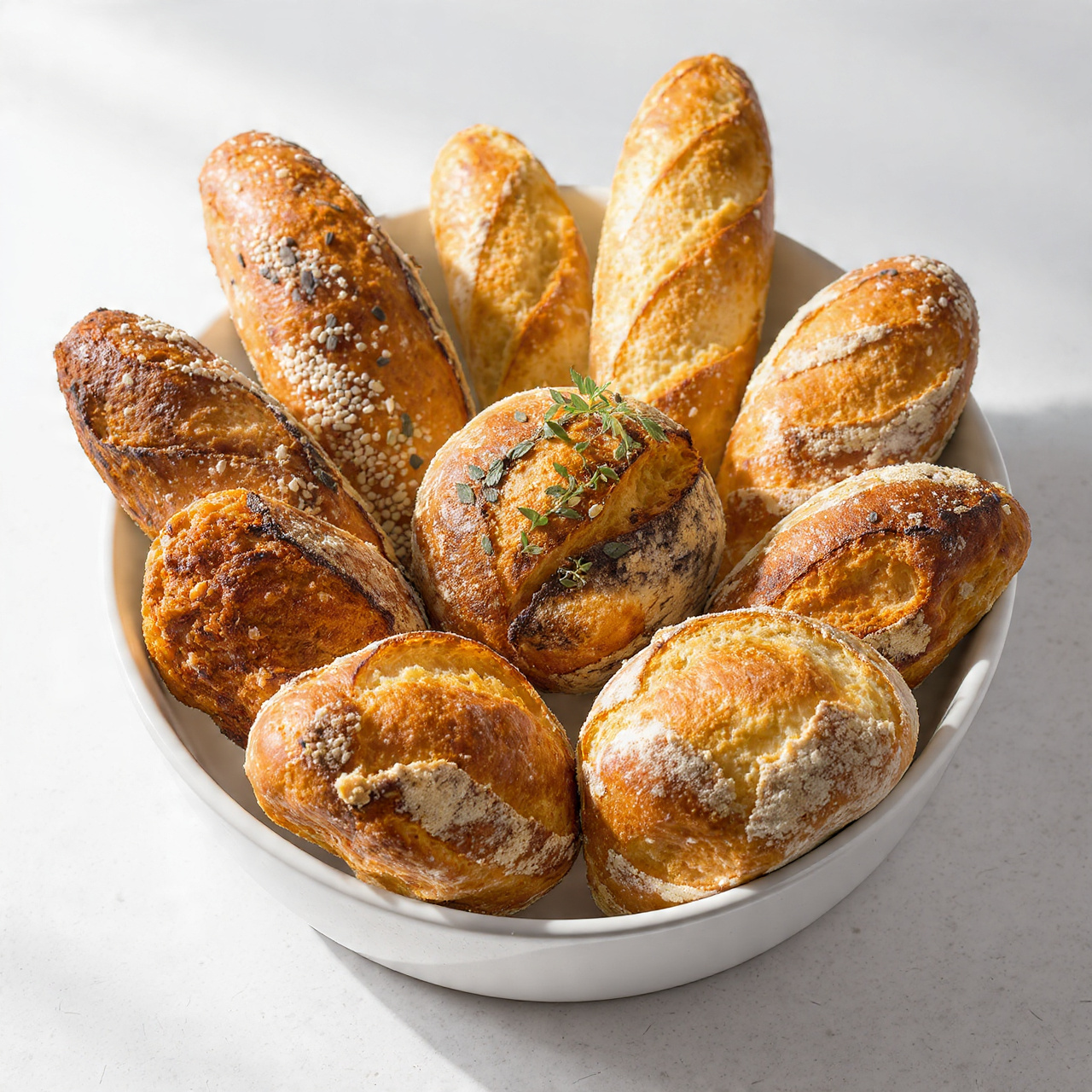
The same logic applies to savory flavoured sourdough. Roasted garlic melts into the open crumb. Fresh rosemary perfumes the entire kitchen as the loaf bakes. Everything bagel seasoning pressed into the crust turns a simple boule into a specialty sourdough bread that disappears within hours.
Here is a quick overview of the five flavors this recipe covers:
- Chocolate Chip Sourdough - semi-sweet chips folded in during bulk fermentation
- Rosemary Roasted Garlic - a deeply savory, herby loaf with Mediterranean roots
- Honey Oat - a subtly sweet, wholesome everyday loaf
- Everything Bagel - all the flavors of your favorite bagel in a sliceable sourdough
- Cinnamon Raisin - a warm, spiced loaf perfect for toasting with butter
Chef's Tip: Always fold in mix-ins like chocolate chips or raisins after your stretch-and-fold session is complete. Adding them too early can tear the gluten structure you have worked hard to build.
The Foundation: Getting Your Starter Right
No flavor combination will save a loaf made with a sluggish starter. Before you mix any dough, your starter should be bubbly, domed, and smell pleasantly tangy, not overly acidic or flat. Feed it 4 to 8 hours before you plan to mix, and use it at peak activity.
If you are new to sourdough, or if your starter has been sitting in the fridge for a while, give it two feedings spaced 12 hours apart before baking day. This is the single most impactful spurdough recipe tip you will ever receive.
A Note on Flour
Bread flour is the preferred choice here. Its higher protein content builds the strong gluten network that gives sourdough its signature chew and helps the dough hold its shape through a long cold proof. You can absolutely use all-purpose flour as a substitute, but expect a slightly softer, more tender crumb rather than that open, glossy interior.
Sour Dough Bread Ideas for Every Occasion
One of the most exciting things about mastering a base sourdough recipe is how easily it becomes a template for creativity. Some of the best sour dough bread ideas come from simply looking at what is already in your pantry:
- Olive and sun-dried tomato for a Mediterranean-inspired loaf
- Jalapeño and sharp cheddar for a spicy, pull-apart showstopper
- Dried cranberry and orange zest for a holiday table centerpiece
- Black sesame and miso for an umami-rich, deeply savory loaf
- Lemon and poppy seed for something bright and unexpected
The method stays the same across every variation. You mix, fold, shape, cold-proof overnight, and bake in a screaming hot Dutch oven. The flavors you fold in are entirely up to you.
Chef's Tip: Wet mix-ins like olives or roasted peppers should be patted very dry before folding into the dough. Excess moisture can throw off your hydration and make shaping difficult.
Ready to bake your first flavored loaf? Here is the complete recipe with full instructions:
Sourdough Bread Flavors: 5 Irresistible Variations to Bake at Home
Discover the most delicious sourdough bread flavors you can bake at home, from rich chocolate chip sourdough to savory specialty loaves that rival any Southern sourdough co bread recipe.
Ingredients
- 4 cups bread flour, plus more for dusting
- 1 cup active sourdough starter, fed and bubbly, at peak activity
- 1 1/4 cups warm water, around 80 degrees F
- 2 tsp fine sea salt
- 3/4 cup semi-sweet chocolate chips, for the chocolate chip variation
- 2 tbsp honey, for sweet variations
- 2 tbsp fresh rosemary, finely chopped, for the herb variation
- 6 roasted garlic cloves, smashed, for the savory variation
- 2 tbsp everything bagel seasoning, for topping the specialty loaf
- 1 tbsp unsalted butter, softened, for greasing the dutch oven lid
Instruction
In a large mixing bowl, combine the warm water and active sourdough starter. Stir until the starter is fully dissolved into the water.
Add the bread flour and salt. Mix with your hands or a dough scraper until no dry flour remains. The dough will feel shaggy at this stage. Cover and let rest for 30 minutes.
Perform 4 rounds of stretch-and-folds over the next 2 hours, spacing each round 30 minutes apart. To stretch and fold, grab one side of the dough, pull it up, and fold it over the center. Rotate the bowl and repeat on all four sides.
After the final fold, fold in your chosen flavor additions. For the chocolate chip sourdough, scatter the chocolate chips over the dough and gently fold them in. For the rosemary garlic variation, distribute the rosemary and roasted garlic evenly throughout the dough.
Shape your dough into a tight round boule or oval batard on a lightly floured surface. Transfer it seam-side up into a well-floured proofing basket or a bowl lined with a floured kitchen towel.
Cover the dough and refrigerate for a cold proof of 8 to 16 hours. This long, slow fermentation is what gives sourdough its complex flavor and open crumb.
When ready to bake, place your Dutch oven into the oven and preheat to 500 degrees F (260 degrees C) for at least 45 minutes.
Carefully remove the hot Dutch oven. Turn the cold dough out onto a piece of parchment paper. Score the top with a sharp lame or razor blade using one confident slash or a decorative pattern.
Lower the dough into the Dutch oven using the parchment as a sling. Cover with the lid and bake for 20 minutes. Then remove the lid, reduce heat to 450 degrees F (230 degrees C), and bake for another 20 to 25 minutes until the crust is deep golden brown.
Transfer the loaf to a wire rack and let it cool for at least 1 hour before slicing. This resting time allows the crumb to set and the interior steam to redistribute.
Equipment
- Large mixing bowl
- Dutch oven (5 to 7 quart)
- Banneton proofing basket or medium mixing bowl
- Bench scraper or dough scraper
- Bread lame or sharp razor blade
- Parchment paper
- Kitchen scale
- Wire cooling rack
- Kitchen towel
Notes
Serving, Storing, and Getting Creative
Flavored sourdough deserves to be shown off. Chocolate chip sourdough is stunning sliced thick and served warm with salted butter or a smear of cream cheese. The rosemary garlic loaf is brilliant alongside a bowl of tomato soup or torn into pieces for dipping in good olive oil.
For storage, keep your loaf at room temperature cut-side down for up to two days. The crust will stay crispier when it is not sealed in plastic. For longer storage, slice the entire loaf, lay the slices on a baking sheet to freeze until solid, and then transfer them to a zip-lock bag. Toast from frozen whenever a craving hits.
If you have been intimidated by sourdough in the past, flavored loaves are actually a wonderful entry point. The mix-ins give you something exciting to work toward, and the process teaches you everything you need to know about fermentation, shaping, and scoring. Once you bake one successful loaf, you will understand exactly what good dough feels like and be off to experiment on your own.