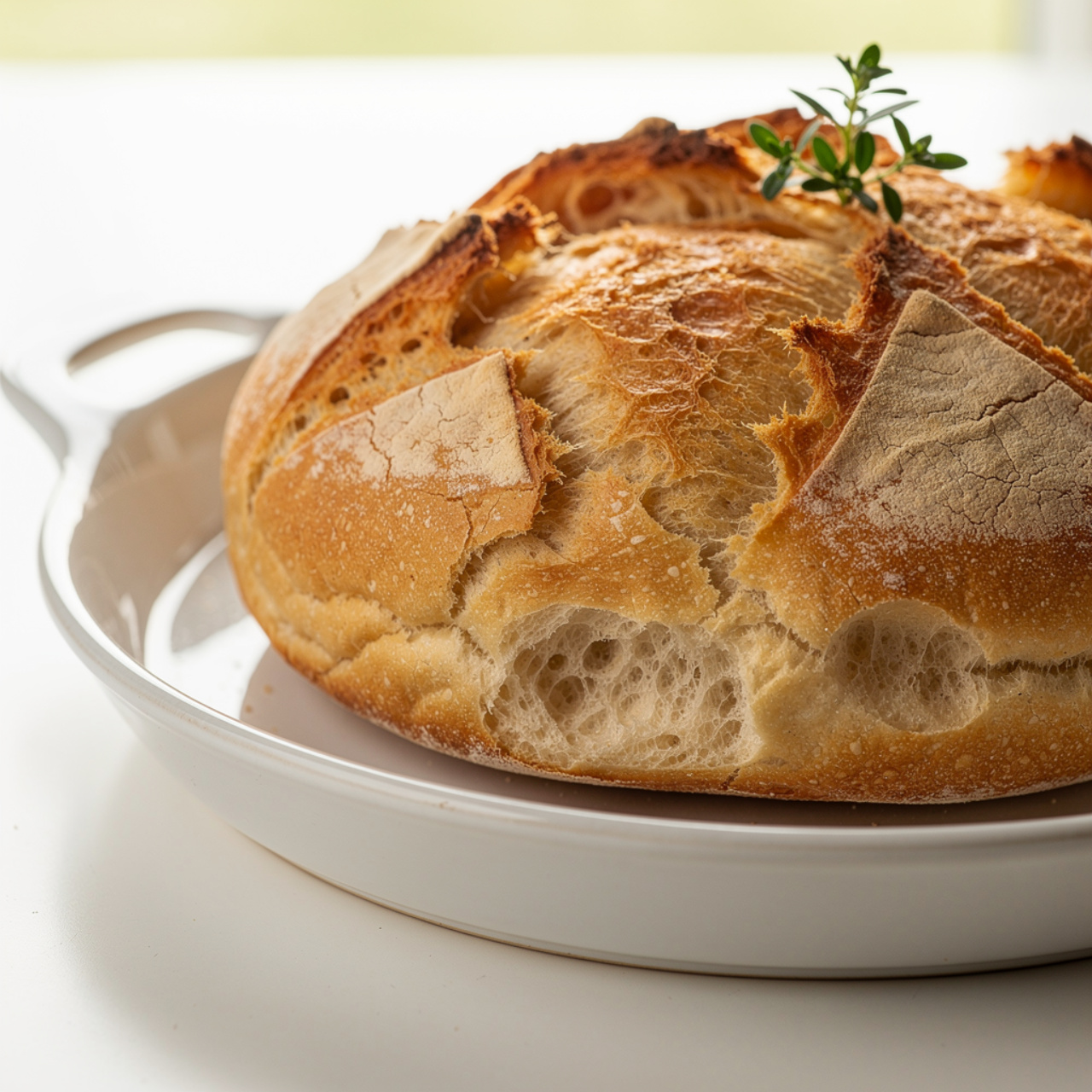
Filipino Spanish Bread: Soft, Buttery Rolls with a Sweet Filling
Filipino Spanish Bread (also called Señorita Bread) is a beloved bakery staple: pillowy soft rolls stuffed with a rich, buttery brown sugar filling and rolled in toasted breadcrumbs for an irresistible finish.
The Filipino Bakery Roll You Will Not Be Able to Stop Eating
If you have ever wandered into a Filipino panaderia, you already know the pull of a warm tray of Spanish Bread fresh from the oven. The breadcrumb-coated exterior. The soft, pillowy dough. That unmistakable ribbon of sweet, caramelized butter filling curling through the center. One bite, and you understand exactly why this roll has held a permanent place in Filipino bakeries for generations.
This is the Filipino Spanish Bread recipe that home bakers have been looking for. It is approachable, detailed, and produces results that genuinely rival your favorite panaderia. Whether you call it Spanish Roll, Señorita Bread, or simply pan de dulce, the technique and the flavors are the same: deeply comforting, lightly sweet, and completely satisfying.
What Makes Filipino Spanish Bread Special
Despite the name, this bread has nothing to do with Spain in a direct culinary sense. Like many Spanish Bread Filipino classics, it is a product of the country's rich bakery culture, shaped over centuries by Spanish colonial influence on local baking traditions. The panaderias of the Philippines turned European-style enriched doughs into something entirely their own, and Spanish Bread is one of the most beloved results.
What sets it apart from other sweet rolls:
- A breadcrumb coating that toasts in the oven and adds a subtle crunch to every bite
- A brown sugar butter filling that melts into the soft crumb as it bakes
- An enriched dough made with eggs, butter, and milk for maximum softness
- A shape that is rolled and spiraled, so every cross-section reveals that gorgeous filling
Chef's Tip: The filling consistency is everything. Mix in the 2 tablespoons of all-purpose flour so the butter and sugar bind together. A filling that is too loose will leak out during baking and burn on the pan.
Getting the Right Tools and Ingredients
For the best results in this Spanish Bread making guide, a few details matter more than you might expect. Using bread flour instead of all-purpose flour gives the dough a chewier, more elastic structure. Good quality unsalted butter, packed brown sugar, and fine plain breadcrumbs (not panko) make a real difference in the final texture and flavor.
Having the right equipment makes the whole process smoother and more enjoyable too.
The Filling: The Heart of Every Spanish Roll
The Spanish Bread filling recipe is deceptively simple: softened butter, brown sugar, and just enough flour to hold it together. You want it spreadable but not runny. Think of it as a thick compound butter with a caramel sweetness.
Spread it generously but leave a border around the edges. Roll tightly. Seal the seam. Then roll the whole thing through breadcrumbs before it hits the baking sheet. That is it. That is the whole magic of the Senorita Bread recipe.
Some bakers like to add a pinch of cinnamon or a whisper of vanilla to the filling, and both are lovely additions. Others tuck a strip of melting cheese inside for a sweet-salty version that is equally iconic in Filipino bakeries.
Tips for a Perfect Rise Every Time
Enriched doughs like this one rise a little more slowly than lean doughs because the butter and sugar slow the yeast. Be patient with both rises.
- Warm your milk properly. Between 105 and 115 degrees F is the sweet spot. Too hot kills the yeast. Too cold and it will not activate.
- Do not rush the first rise. Let the dough fully double. A warm, draft-free oven (turned off, with just the oven light on) is a great environment.
- The second rise matters. After shaping, those 20 to 25 minutes of rest let the gluten relax and the rolls puff slightly before baking.
Baker's Note: If your kitchen is cold, the dough can take up to 90 minutes to double on the first rise. That is completely fine. A slower rise often develops better flavor.
Ready to Bake Your Own Filipino Spanish Bread?
You now have everything you need: the technique, the tips, and the context for one of the most loved Spanish Bread baking ideas in Filipino home cooking. Here is the complete step-by-step recipe:
Filipino Spanish Bread: Soft, Buttery Rolls with a Sweet Filling
Filipino Spanish Bread (also called Señorita Bread) is a beloved bakery staple: pillowy soft rolls stuffed with a rich, buttery brown sugar filling and rolled in toasted breadcrumbs for an irresistible finish.
Ingredients
- 3 cups bread flour, plus extra for dusting
- 2 1/4 tsp instant dry yeast, one standard packet
- 1/4 cup granulated sugar, for the dough
- 3/4 tsp salt
- 3/4 cup whole milk, warmed to 110 degrees F
- 2 large eggs, room temperature
- 4 tbsp unsalted butter, softened, for the dough
- 6 tbsp unsalted butter, softened, for the filling
- 1/2 cup brown sugar, packed, light or dark
- 2 tbsp all-purpose flour, for the filling, to thicken
- 3/4 cup fine breadcrumbs, plain, for coating
Instruction
Warm the milk to about 110 degrees F. Combine it in a large bowl with the yeast and 1 teaspoon of the sugar. Stir gently and let it sit for 5 to 10 minutes until foamy. If it does not foam, your yeast may be expired.
Add the remaining granulated sugar, eggs, and salt to the yeast mixture and whisk to combine.
Add the bread flour one cup at a time, mixing with a wooden spoon or dough hook until a shaggy dough forms.
Add the softened butter (for the dough) and knead by hand on a lightly floured surface, or with a stand mixer on medium speed, for 8 to 10 minutes until the dough is smooth, soft, and slightly tacky but not sticky.
Shape the dough into a ball and place it in a lightly greased bowl. Cover with plastic wrap or a clean kitchen towel and let it rise in a warm spot for 60 to 75 minutes, or until doubled in size.
While the dough rises, make the filling. Beat together the softened butter (for the filling), brown sugar, and 2 tablespoons of all-purpose flour until it forms a smooth, spreadable paste. Set aside.
Spread the fine breadcrumbs evenly on a large plate or shallow baking tray. Set aside.
Once the dough has doubled, punch it down gently. Turn it out onto a lightly floured surface and divide it into 16 equal pieces.
Working one piece at a time, roll each piece of dough into a small oval or rectangle, roughly 5 by 3 inches. Spread about 1 heaping teaspoon of the butter-sugar filling across the surface, leaving a small border.
Roll the dough up tightly from the short end into a log shape, pinching the seam to seal. Roll the shaped log in the breadcrumbs, pressing lightly so they adhere all over.
Place the rolls seam-side down on a parchment-lined baking sheet, leaving about 1 inch of space between each. Cover loosely and let them rest for 20 to 25 minutes while you preheat the oven to 350 degrees F (175 degrees C).
Bake for 15 to 18 minutes until the rolls are lightly golden on top and cooked through. The breadcrumb coating will turn a warm, toasty brown. Do not overbake or they will dry out.
Remove from the oven and let cool for at least 5 minutes before serving. They are best enjoyed warm.
Equipment
- Stand mixer with dough hook (or large mixing bowl for hand kneading)
- Plastic wrap or clean kitchen towel
- Large baking sheet
- Parchment paper
- Rolling pin
- Pastry brush (optional)
- Shallow plate or tray for breadcrumbs
Notes
Serving, Storing, and Variations
Spanish Bread is best eaten warm, ideally within the first hour out of the oven when the filling is still slightly gooey and the breadcrumb crust has a gentle crispness. Set out a tray at breakfast or merienda (the Filipino afternoon snack hour) and watch them disappear.
For storage: Keep in an airtight container at room temperature for up to 2 days, or refrigerate for up to 5 days. A quick 15-second microwave blast brings them back to life beautifully.
Variations worth trying:
- Add a pinch of cinnamon to the filling for warmth
- Tuck a thin slice of Edam or quick-melt cheese inside for the classic cheese-sweet combo
- Brush the tops lightly with egg wash before baking for a deeper golden color
However you serve them, this Spanish Bread Filipino recipe brings a little piece of the panaderia right into your kitchen.